
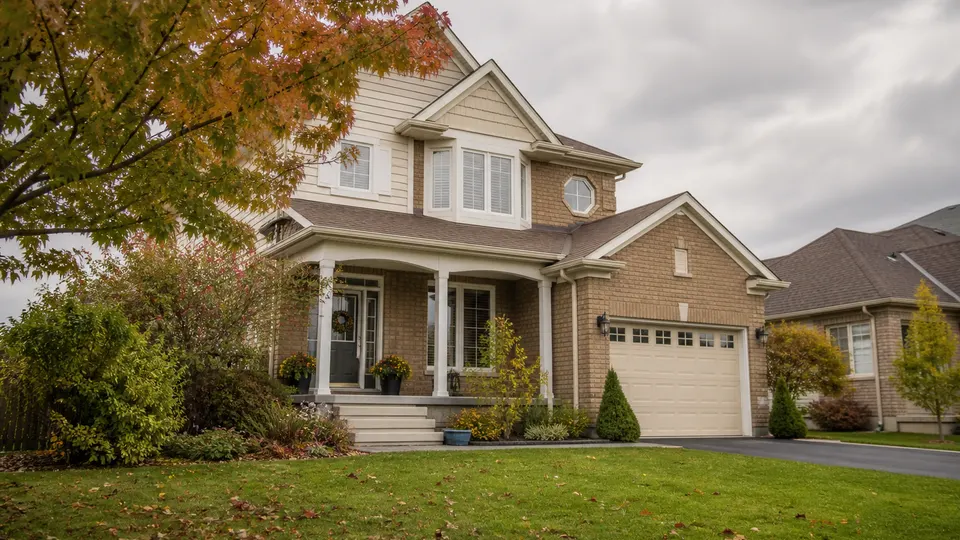
When a basement flood in Burlington and a hailstorm in Calgary hit the same week last August, two families discovered the same painful truth: their home insurance policies looked comprehensive on paper but failed where it mattered most. One lacked overland flood coverage; the other had a replacement-cost cap that no longer matched rebuilding estimates. Both thought they were fully protected.
Home insurance in Canada is not a single product — it is a bundle of promises that shift with postal code, building type, and the fine print your broker may not emphasize at renewal time.
In 2026, Canadian homeowners face a market shaped by climate-driven losses, tighter underwriting in high-risk zones, and widening gaps between what policies say and what adjusters pay. The Insurance Bureau of Canada reports that insured catastrophic losses exceeded $8 billion in several recent years, and residential claims frequency continues to climb in British Columbia, Alberta, and parts of Ontario. That pressure flows directly into premiums, deductibles, and the availability of optional riders.
This guide is built around decisions, not slogans. Whether you own a detached home in Halifax, a Vancouver condo, or rent an apartment in Winnipeg, the framework below helps you audit coverage before the next renewal letter arrives.
The anatomy of a standard homeowner policy
Most Canadian homeowner policies combine several coverage sections under one contract. Understanding each section separately prevents the common mistake of comparing only the total annual premium.
- Dwelling coverage (Coverage A): Pays to repair or rebuild the physical structure. Must reflect current rebuilding costs, not purchase price or municipal assessment.
- Detached structures (Coverage B): Garages, sheds, fences — often capped at 10–20% of dwelling limit unless increased.
- Personal property (Coverage C): Belongings inside the home. Condo owners especially need to verify limits for upgrades, bikes, and jewellery endorsements.
- Additional living expenses (Coverage D): Hotel and meal costs if your home is uninhabitable after a covered loss. Undervalued limits surface painfully during long rebuilds.
- Personal liability (Coverage E): Protects you if someone is injured on your property or you accidentally damage someone else's property.
Tenants need a tenant or renter's policy — the landlord's insurance covers the building, not your possessions or your liability if you cause a fire or flood.
2026 market realities: why premiums keep moving
Insurers price risk. When wildfire zones expand in BC and Alberta, when convective storms hammer the Prairies, and when sewer backups spike in aging Ontario municipalities, the entire pool of policyholders absorbs some of that cost — even in lower-risk neighbourhoods.
Several trends define the 2026 renewal cycle:
- Inflation in building materials and labour pushes replacement-cost estimates upward. A dwelling limit set in 2022 may be 15–25% low today.
- Stricter wildfire and flood underwriting in designated high-risk areas. Some insurers decline new business; others require mitigation steps or separate deductibles.
- Higher base deductibles offered in exchange for modest premium relief — a trade-off that hurts on smaller claims.
- Condo corporation deductible shifts in BC and Ontario, where strata and corporation deductibles have risen into six figures, leaving unit owners exposed without matching loss-assessment coverage.
"We assumed 'full replacement' meant the insurer would rebuild our house exactly as it was. After the fire, we learned our policy had a functional replacement clause that allowed cheaper materials in non-visible areas. That distinction cost us tens of thousands of dollars out of pocket." — Homeowner, Kelowna, BC, speaking to a consumer advocacy group in 2025
Coverage gaps Canadians discover too late
The following exclusions and limitations cause the most disputes at claim time. Treat each as a checklist item before you sign.
| Peril or scenario | Typically covered? | What to ask your broker |
|---|---|---|
| Sewer backup | Optional endorsement | Limit, deductible, and whether combined with overland flood |
| Overland flood | Optional; not available everywhere | Eligibility by flood zone; sub-limits in high-risk areas |
| Earthquake | Optional in most provinces | Deductible often 5–15% of dwelling value — can you absorb it? |
| Home-based business inventory | Limited or excluded | Separate commercial rider if you store stock or see clients at home |
| Short-term rental (Airbnb) | Often excluded without disclosure | Notify insurer; obtain short-term rental endorsement |
| Jewellery, art, collectibles | Sub-limited unless scheduled | Appraisals and scheduled items for high-value pieces |
Water damage remains the leading source of residential claims in Canada. Yet many policies still treat sewer backup, groundwater seepage, and overland flood as three different events with three different coverage paths. Read the definitions section of your policy — not just the coverage summary page.
Provincial differences that change your checklist
Home insurance is regulated provincially. The product looks similar nationwide, but local rules and market conditions differ materially.
Ontario and Quebec
Ontario's competitive private market gives consumers many carrier choices, but also wide variation in flood and sewer endorsements by postal code. Quebec homeowners navigate both private insurers and unique civil-law concepts around co-ownership; condo buyers should review the building's master policy and their own unit coverage together. Ice storms and freezing rain drive winter claims across both provinces — verify that burst-pipe scenarios are covered when you leave for extended travel.
British Columbia and Alberta
Wildfire risk dominates underwriting conversations in BC interior communities and parts of Alberta. Some insurers use wildfire scoring models that affect not only premiums but eligibility. Alberta's hail corridor around Calgary and Red Deer produces recurring roof and siding claims; ask about cosmetic damage exclusions and whether actual cash value applies to older roofs. BC's earthquake risk makes the optional earthquake endorsement worth modelling even if the deductible is large.
Atlantic Canada and the Prairies
Atlantic homeowners contend with hurricane remnants, coastal wind, and aging infrastructure that contributes to sewer backups. Saskatchewan and Manitoba see sharp temperature swings that stress plumbing and foundations. In all three Prairie provinces, rural properties may need separate scheduling for outbuildings, farm equipment, or hobby livestock — standard homeowner forms do not automatically cover them.
Three households, three renewal strategies
Abstract advice becomes useful when applied to real constraints. Consider these composite scenarios drawn from common 2025–2026 renewal situations.
The Toronto semi-detached owner (built 1940s): Dwelling limit was $650,000; contractor estimates now exceed $820,000. Sewer backup endorsement at $50,000. Action taken: increased dwelling to replacement-cost appraisal value, raised sewer backup to $100,000, added overland flood after municipal flood mapping update. Premium rose 11%; uncovered flood exposure eliminated.
The Edmonton new-build owner: Builder warranty active; standard policy with $1,000 deductible. Hail deductible offered at 2% of dwelling value ($7,400 on a $370,000 home). Action taken: kept standard deductible for non-hail claims, accepted percentage hail deductible after comparing ten-year hail probability, documented smart-home leak sensors for a small discount.
The Montreal condo purchaser: Corporation deductible recently increased to $150,000. Unit policy had $25,000 loss-assessment coverage. Action taken: increased loss-assessment and unit betterments coverage, added water damage deductible buy-down endorsement, verified short-term rental prohibition in bylaws before hosting.
How to read your renewal like an adjuster
When your renewal package arrives, block ninety minutes and work through this sequence:
- Compare dwelling limit to a recent rebuilding estimate or online replacement-cost calculator — adjust upward if needed.
- Locate deductibles for all perils, including wind, hail, water, and earthquake if applicable.
- Confirm endorsements are listed with limits matching last year — insurers sometimes drop optional coverage at renewal unless you re-request it.
- Review liability limit; $1 million is a common minimum but $2 million costs little extra for many households with pools, trampolines, or teenage drivers.
- Check mortgagee clause and lender notification requirements if you refinance.
- Document high-value items with photos and receipts stored off-site or in cloud storage.
If anything material changed — renovation, rental suite, home business, new wood stove, or change in occupancy — notify your insurer before renewal. Non-disclosure can void coverage entirely.
Shopping fairly: brokers, direct writers, and comparison tools
Canadian consumers can buy through independent brokers, captive agents, or direct online insurers. None is universally cheapest; the best fit depends on complexity. A straightforward suburban home may price well through a direct writer, while a heritage home with oil heat and a finished basement benefits from a broker who can place specialty markets.
Comparison platforms aggregate quotes but may not surface every carrier or every endorsement combination. Use them as a starting point, then confirm details in writing with whichever insurer you select. Ask explicitly: "Is overland flood included in this quote, and what is the sub-limit for my postal code?"
Claims preparation that pays off
The best claim is the one you never file. The second-best is the one where documentation is already organized.
- Maintain a home inventory with serial numbers and purchase dates.
- After any loss, photograph damage before cleanup when safe to do so.
- Keep receipts for emergency repairs — mitigation costs are often recoverable.
- Understand your duty to prevent further damage; insurers expect reasonable temporary repairs.
- Know the complaint and ombudsman path in your province if settlement stalls.
"Insurance literacy is not about becoming an expert — it is about asking the right questions once a year so you are not learning policy language in a crisis." — Consumer affairs columnist, national business publication, January 2026
Your 30-day action plan
Week one: pull your current policy and declarations page. Highlight dwelling limit, deductibles, and endorsements. Week two: obtain two comparative quotes with identical assumptions. Week three: schedule a fifteen-minute call with your broker or insurer to close identified gaps. Week four: upload your home inventory and store policy PDFs where family members can access them.
Home insurance will never feel as satisfying as a renovation reveal or a paid-off mortgage. But when the next storm season arrives, a policy aligned with 2026 realities is the difference between rebuilding and bargaining.
Where to start this week
If the sections above feel like a lot, you do not need to solve every gap tonight. The households that fare best at renewal are the ones that know their property type, their water exposures, the age of the roof, and how soon the current term ends. Those four facts change which endorsements matter and which deductibles are a false economy.
Use the short coverage check below to map your situation against the gaps we see most often. It takes about a minute. Your answers stay on this page until you choose what to do with the summary.