
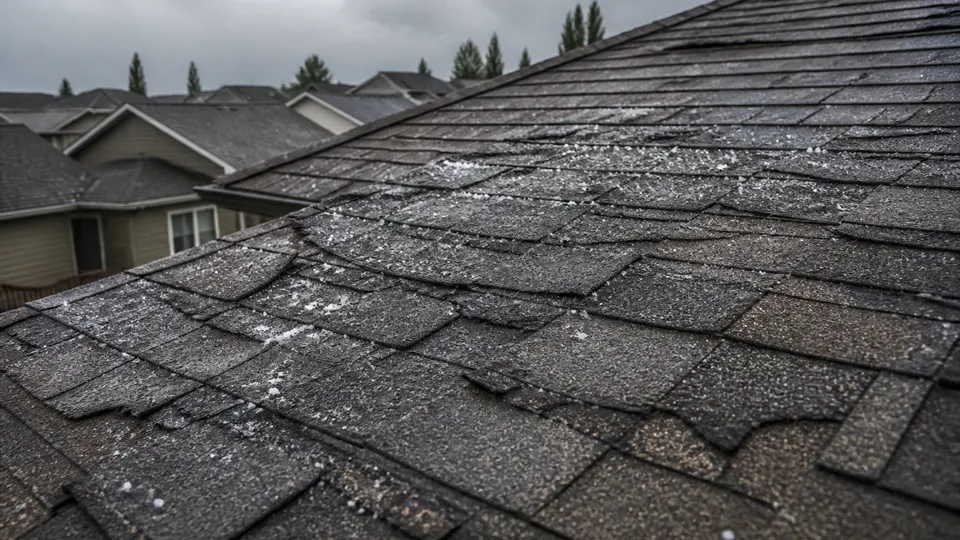
Hail in Alberta is not a freak storm. It is a seasonal cost centre. The policy details that matter are the ones nobody reads while the ice is still in the gutter.
Communities around Calgary, Red Deer, and across the Prairie hail belt see convective storms that bruise cars and bruise roofs in the same twenty minutes. Homeowners then meet three ideas at once: a wind/hail deductible that may be a percentage of dwelling value, a roof that is paid at actual cash value because of age, and a contractor on the driveway with a ladder and a business card printed that afternoon.
Percentage deductibles
Some Prairie policies offer a lower premium in exchange for a hail or wind deductible of 1–2% (sometimes more) of the dwelling limit. On a $450,000 replacement-cost limit, 2% is $9,000. A $1,000 “standard” deductible in the booklet does not apply if the hail deductible is listed on the declarations page.
That trade can be rational if you can fund $9,000 and the premium savings are real over a decade. It is not rational if you took the discount and still expect the insurer to pay a $6,000 shingle job in full.
Replacement cost versus actual cash value
Roofs have a lifespan. Many forms shift older roofs to actual cash value (ACV): replacement minus depreciation. A 22-year-old asphalt roof that “looks fine” may be near the end of its payable life. Hail that would have been a full replacement at year eight becomes a small cheque at year twenty-two.
Ask, before the storm: At what roof age does ACV apply? Is there a matching-shingle condition if only one slope is hit? Do impact-resistant shingles change the deductible?
Cosmetic damage
Dents on metal roofs, fascia, and gutters that do not leak can be treated as cosmetic. If the policy excludes cosmetic hail damage, a dented eavestrough that still drains may not be a claim. Photograph function, not only appearance: standing water, lifted tabs, granules in downspouts, wet sheathing.
Cars in the driveway are a different policy
Home insurance does not fix the vehicles. Comprehensive auto coverage does. File both if both are damaged, and do not let a home contractor “include the cars.” Keep the claim files separate so depreciation arguments do not cross.
Storm-chaser season
After a named hail event, door-to-door roofing crews appear. Some are licensed and competent. Some want an assignment of benefits and a signature before you have spoken to the insurer. You are not required to hire the first ladder. Get the claim number, let the insurer inspect or use their preferred process, then choose a contractor you can still reach in November.
- Do not sign an assignment that locks you to a price you have not seen.
- Check municipal licensing where required.
- Match the scope to the adjuster’s estimate; upgrades are your renovation, not the storm’s.
A northeast Calgary example
A 2012-built home had a 2% hail deductible and a roof still on replacement cost. After a July storm, the dwelling claim was: replace the roof, some vinyl siding, and a skylight, minus $8,400. The family had the deductible in a savings account because they had chosen the percentage knowingly. Next door, a similar house on ACV for an older reroof received a four-figure cheque and a disagreement about remaining life. Same storm, different declarations pages.
What to do this week if you live in the corridor
- Read the deductible section for wind and hail specifically.
- Note roof age and covering type in a photo dated this season.
- If you cannot absorb a percentage deductible, ask the price to buy it down.
- Park what you can under cover when warnings drop; it will not change the home deductible, but it shrinks the auto claim.
Hail claims are not won by anger at the weather. They are won by knowing which deductible you bought and what the roof is worth on the insurer’s depreciation table — in May, not in the hail trough.